Contains a vector of polygons and is iterable. More...
#include <Scene.hpp>
Collaboration diagram for Scene:
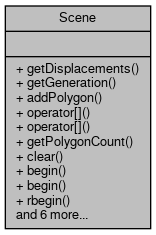
Public Member Functions | |
| const auto & | getDisplacements () const |
| vector of all displacements More... | |
| unsigned | getGeneration () const |
| Get the generation of the scene. More... | |
| int | addPolygon (Polygon const &pol) |
| Polygon & | operator[] (size_t const index) |
| Polygon const & | operator[] (size_t const index) const |
| size_t | getPolygonCount () const |
| void | clear () |
| Clear the scene by deleting all polygons. More... | |
| std::vector< Polygon >::iterator | begin () |
| std::vector< Polygon >::const_iterator | begin () const |
| std::vector< Polygon >::const_reverse_iterator | rbegin () const |
| std::vector< Polygon >::iterator | end () |
| std::vector< Polygon >::const_iterator | end () const |
| std::vector< Polygon >::const_reverse_iterator | rend () const |
| void | applyDisplacement (size_t _canvasSize) |
| Apply the current stored displacement. More... | |
| void | addDisplacement (Point p, float newRadius) |
| void | setDisplacementRadius (float rad) |
Detailed Description
Contains a vector of polygons and is iterable.
Displacement of polygons can be done at a leter time.
Member Function Documentation
◆ addDisplacement()
|
inline |
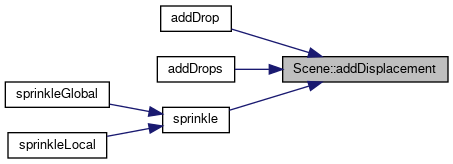
Here is the caller graph for this function:
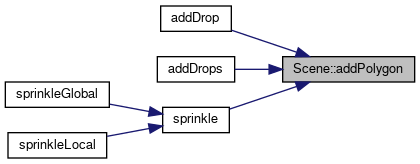
◆ addPolygon()
|
inline |
◆ applyDisplacement()
|
inline |
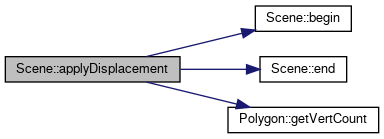
Apply the current stored displacement.
The generation will increase by one.
Here is the call graph for this function:
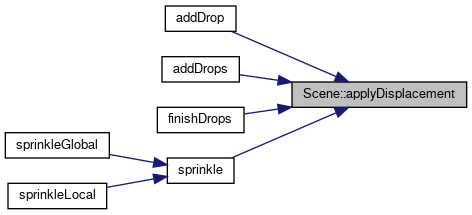
Here is the caller graph for this function:
◆ begin() [1/2]
|
inline |
- Returns
- Begin iterator over the polygons in the scene
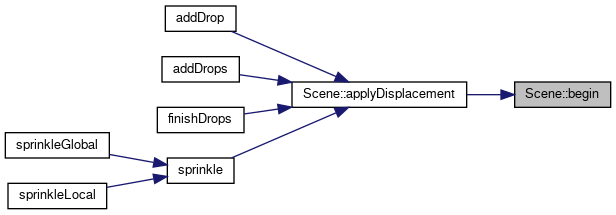
Here is the caller graph for this function:
◆ begin() [2/2]
|
inline |
- Returns
- Begin const_iterator over the polygons in the scene
◆ clear()
|
inline |
Clear the scene by deleting all polygons.
Here is the caller graph for this function:

◆ end() [1/2]
|
inline |
- Returns
- End iterator over the polygons in the scene
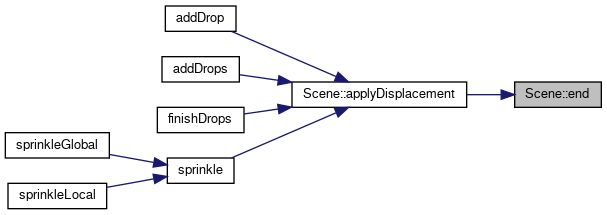
Here is the caller graph for this function:
◆ end() [2/2]
|
inline |
- Returns
- End const_iterator over the polygons in the scene
◆ getDisplacements()
|
inline |
vector of all displacements
Get the currently saved displacements.
- Returns
- Displacement vector
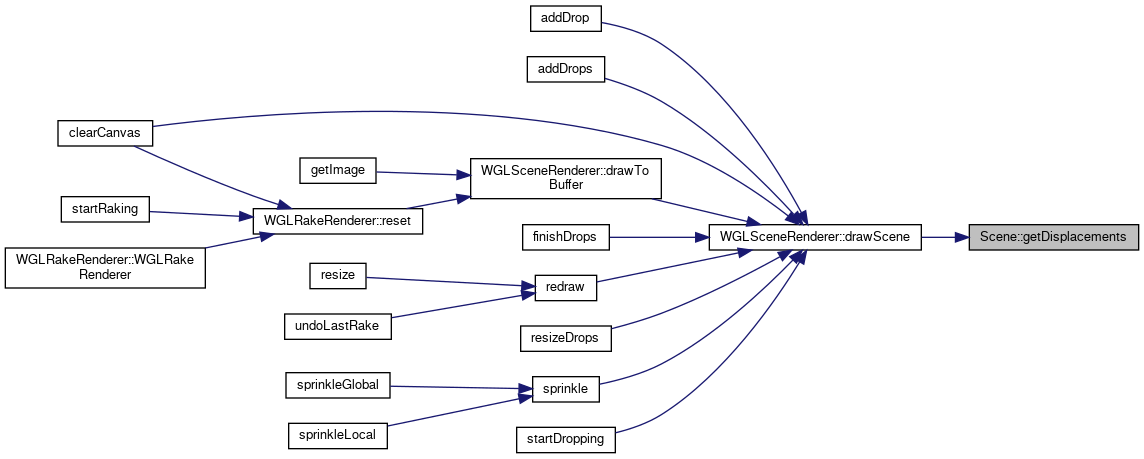
Here is the caller graph for this function:
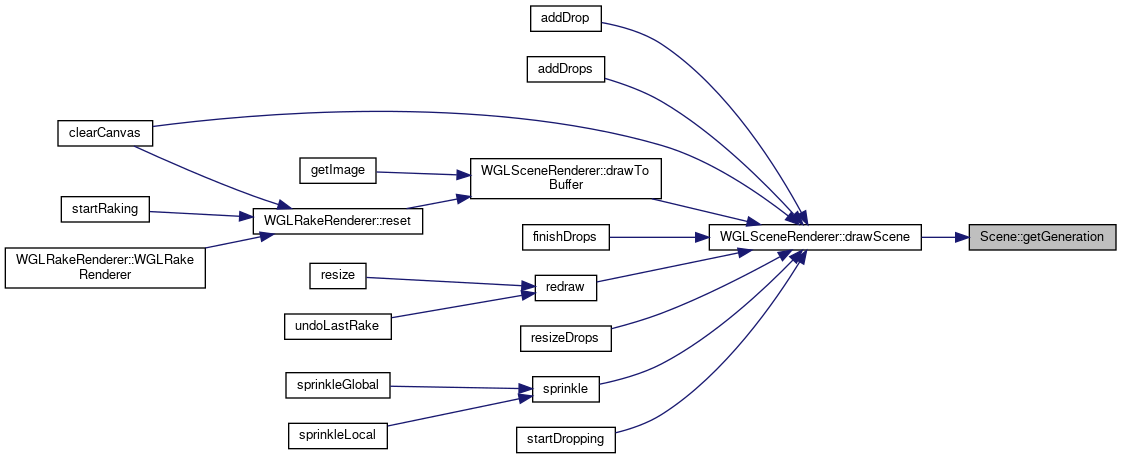
◆ getGeneration()
|
inline |
Get the generation of the scene.
Here is the caller graph for this function:
◆ getPolygonCount()
|
inline |
- Returns
- Number of polygons in the scene
◆ operator[]() [1/2]
|
inline |
Get or set the polygon at index, might throw std::out_of_range
- Parameters
-
index Index of the polygon you want to access
- Returns
- Reference to the requested polygon
◆ operator[]() [2/2]
|
inline |
Get the polygon at index, might throw std::out_of_range
- Parameters
-
index Index of the polygon you want to read
- Returns
- Reference to the requested polygon
◆ rbegin()
|
inline |
- Returns
- Begin reverse const_iterator over polygons in the scene
◆ rend()
|
inline |
- Returns
- End const_reverse_iterator over polygons in the scene.
◆ setDisplacementRadius()
|
inline |
Here is the caller graph for this function:

The documentation for this class was generated from the following file:
- include/Scene.hpp